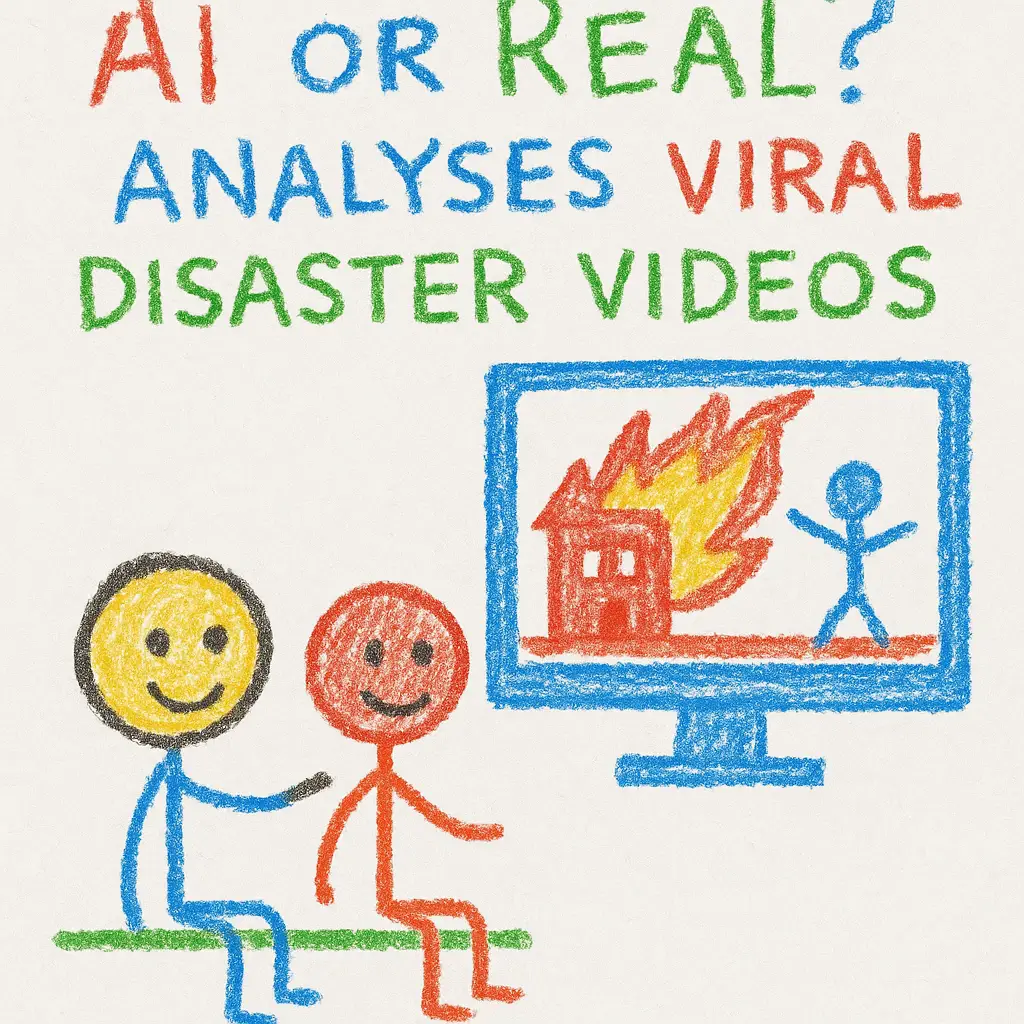
AI or real? BBC analyses viral China disaster videos
Explain Like I'm 5
Okay, imagine you're playing with your toy dinosaurs, and you pretend they're having a big battle. Now, what if someone made a super cool video that looked like real dinosaurs were fighting, but they were just made on a computer? That’s kinda what's happening with some videos coming from China.
Some people are sharing videos of big storms or disasters, but we can’t tell if they’re real or made by a computer. The big takeaway? Just because you see something on the internet doesn’t mean it’s true!
Explain Like I'm 10
So, here's the deal: in China, there are a lot of extreme weather events happening, like super strong storms and floods. People are recording these events and sharing them online. But, some videos are so convincing that they look real but are actually made using computer programs, also known as AI.
This is a big problem because when fake videos spread, they can create panic or misinformation. Imagine if everyone thought there was a giant flood when it was just a really good animation! People have to be careful about what they believe and share. Right now, experts are trying to figure out how to tell the difference between real footage of these disasters and the fake ones.
Explain Like I'm 15
In recent times, China has been experiencing increasingly severe weather events, leading to a surge in videos circulating on social media that depict these disasters. However, not all of these videos are genuine; some are generated by artificial intelligence, making it challenging for viewers to discern what is real and what is fabricated. This situation raises significant concerns about misinformation and its potential impact on public perception and response to actual disasters.
The main players here are the individuals creating and sharing these videos, the AI technology that can produce realistic visuals, and the audiences consuming this content. The urgency of the issue is heightened by the rapid spread of these videos, especially during critical weather events, as people often react impulsively to what they see online. This can lead to unnecessary panic or misinformed decisions.
Historically, the rise of deepfake technology and advanced video editing tools has made it increasingly easy to create convincing yet false representations of reality. This situation is not just a technological concern but also a social one, as it affects how we communicate and trust information in our digital age. Experts warn that if this trend continues, we may face significant challenges in distinguishing fact from fiction, particularly during emergencies when accurate information is crucial.
Looking ahead, it's essential for platforms to develop better systems for verifying video content. As the technology evolves, so must our media literacy skills to navigate this complex landscape. In the meantime, we should all adopt a healthy dose of skepticism when scrolling through our feeds—because sometimes, the scariest thing is not the storm itself but what it looks like online!
Want to read the original story?
View Original Source