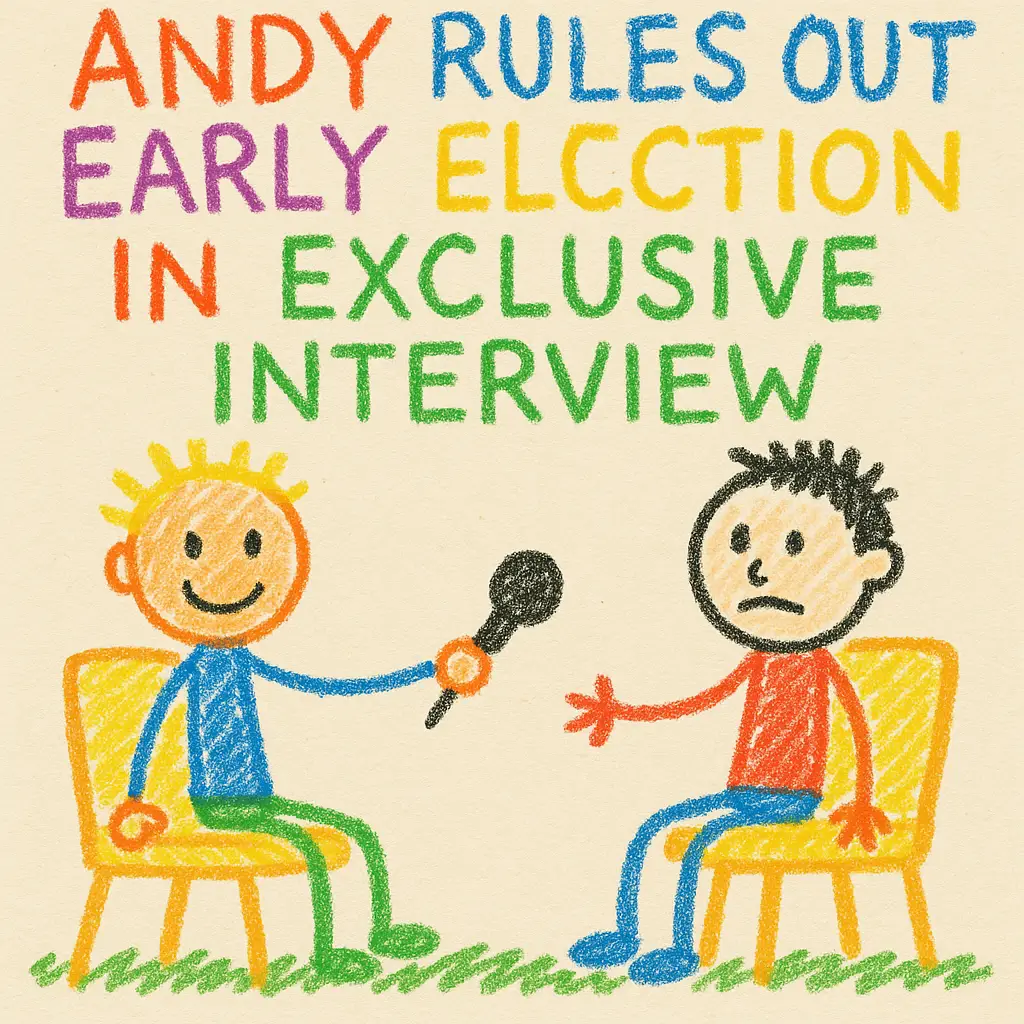
Andy Burnham rules out early election in exclusive BBC interview
Explain Like I'm 5
Okay, imagine you have a big box of crayons, and you picked a color to color a picture. Now, after you start, someone asks if you want to change the color right away. You say, “No way! I picked this color, and I’m going to finish my picture with it!”
That’s kind of what Andy Burnham is saying. He’s the new boss of the country (like the principal of a school), and he told a reporter that he won’t have a big vote (an election) soon because he wants to stick to the plan he made when people voted for him. The big takeaway? He’s committed to his plans and wants to follow through!
Explain Like I'm 10
So, here’s the scoop: Andy Burnham is the new Prime Minister, kind of like the captain of a ship. He just had an interview with a reporter named Laura Kuenssberg, who asked him if there would be an early election. Think of an early election like saying, “Hey, can we change captains mid-journey?”
Burnham said, “Nope, not happening!” He explained that when people voted for him, they chose him based on his promises—like a recipe for a cake. If he changes the recipe now, the cake might not turn out as expected. This is happening now because people are curious about what he’ll do next, especially since elections can change the whole crew of leaders in the government. The immediate consequence? People might have to wait longer to see if he keeps his promises or if changes are needed.
Explain Like I'm 15
Alright, let’s dig a little deeper. Andy Burnham is currently the Prime Minister, and he recently gave an exclusive interview where he addressed the possibility of an early general election. In political terms, a general election is when citizens vote to choose their leaders and set the direction for the government. Burnham firmly stated that he will not call for an early election, emphasizing that people voted for a specific set of promises he made—his manifesto.
The context here is significant. Burnham took office with a clear agenda, and by ruling out an early election, he’s signaling his commitment to fulfilling those promises. This decision is also strategic; it allows him to focus on governance rather than campaigning, which can often distract from actually running the country. In the political landscape, maintaining stability is crucial, and an early election could lead to uncertainty.
Historically, this kind of decision can impact a leader’s credibility. If Burnham sticks to his plans and effectively addresses the issues facing the country, he may strengthen his position. Conversely, if he fails to deliver, it could lead to criticism down the line. Moreover, this decision could affect the political dynamics within his party and among opposition parties. Some experts suggest that by ruling out an early election, Burnham aims to consolidate his support and avoid the pitfalls of a potentially divisive election cycle.
Looking ahead, we might expect him to focus on delivering results that align with his manifesto. If he does well, he could gain public trust, paving the way for a stronger position in future elections. If not, well, let’s just say the political waters could get a bit murky!
Want to read the original story?
View Original Source