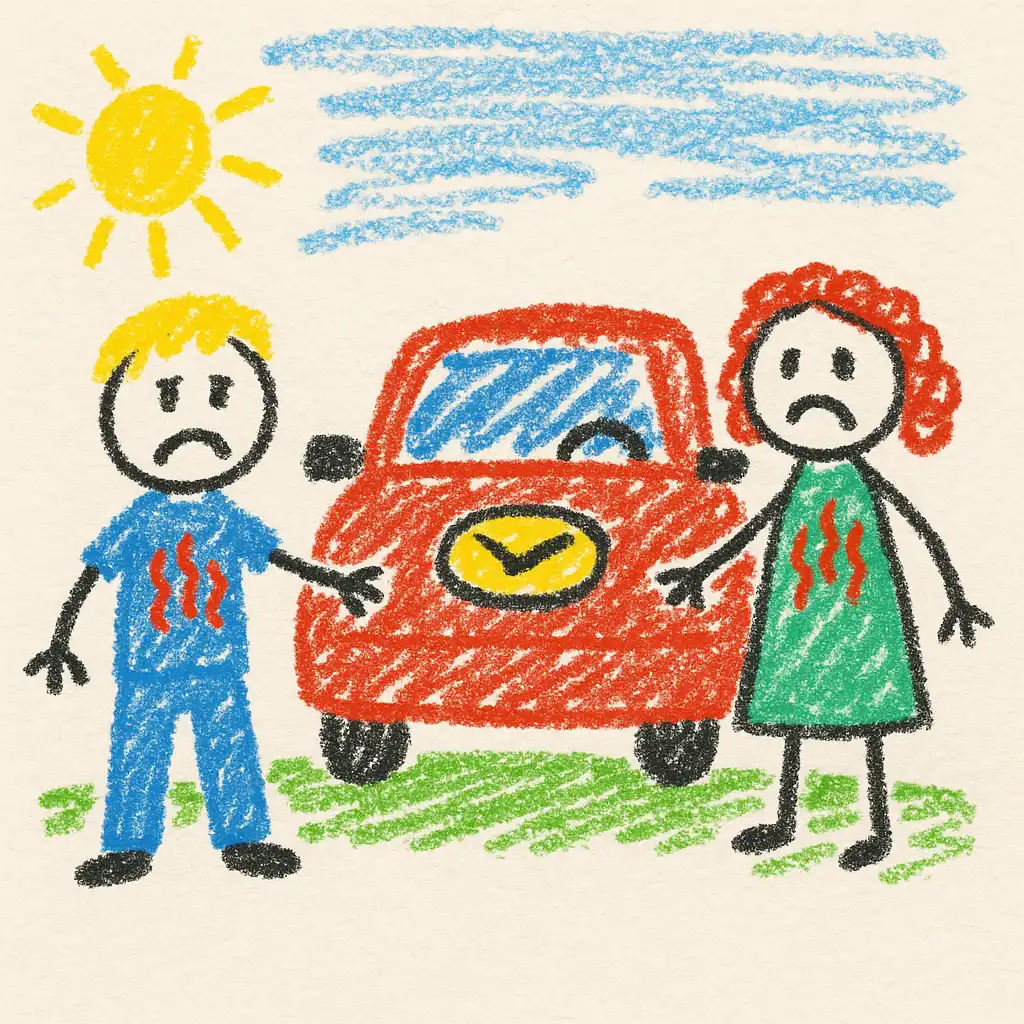
Russell takes Melbourne pole after Verstappen crash
Explain Like I'm 5
Imagine you and your friends are racing with toy cars, and the fastest toy gets to start at the front in the next race—that's like getting the "pole position." Now, imagine that the fastest kid in class, let's call him Max, trips and falls while running to pick up his toy car. Because he fell, he couldn't race as fast as usual. Meanwhile, another kid, George, zips ahead and gets to start at the front in the next big race. That's basically what happened in a big car race in Melbourne, Australia. George Russell got to be in the front because Max Verstappen, who is usually super fast, had a crash.
Explain Like I'm 10
In the world of car racing, getting to start at the front of the line, which is called "pole position," is a big deal because you don’t have as many cars to pass to get to the front. In Melbourne, Australia, during a car race qualifying session (that's when drivers race to see who gets to start at the front), something unexpected happened. Max Verstappen, a very famous and fast driver, crashed his car. This crash meant he couldn't compete to be the fastest in that session. Because of this, George Russell, another driver but for the Mercedes team, did the best and won the pole position. This was a big moment because it showed that his team, Mercedes, was doing really well, especially when the usual top driver, Max, was out of the picture.
Explain Like I'm 15
In Formula 1, which is the top level of car racing, qualifying sessions are crucial. They determine the order in which cars will start the race, with the fastest in qualifying taking pole position. At the Australian Grand Prix, an unexpected twist occurred during these qualifiers. Max Verstappen, who is one of the leading drivers and races for Red Bull, had an accident and crashed his car. This incident prevented him from setting a competitive time and potentially securing the top start position.
George Russell, driving for Mercedes, capitalized on Verstappen's misfortune and outperformed everyone else, securing the pole position. This is significant because it suggests a shift in performance dynamics, with Mercedes showing they can lead, especially when a dominant player like Verstappen is down. The crash not only affected Verstappen's chances but also highlighted the unpredictable nature of racing, where equipment failure, driver errors, or simple bad luck can turn the tables at any moment.
This event could have broader implications for the championship standings, affecting team strategies and morale. It demonstrates the high stakes and high-pressure environment of Formula 1 racing, where every second and every race can dramatically alter the season's outcome.
Want to read the original story?
View Original Source