
Shell profits double as oil prices rise due to Iran war
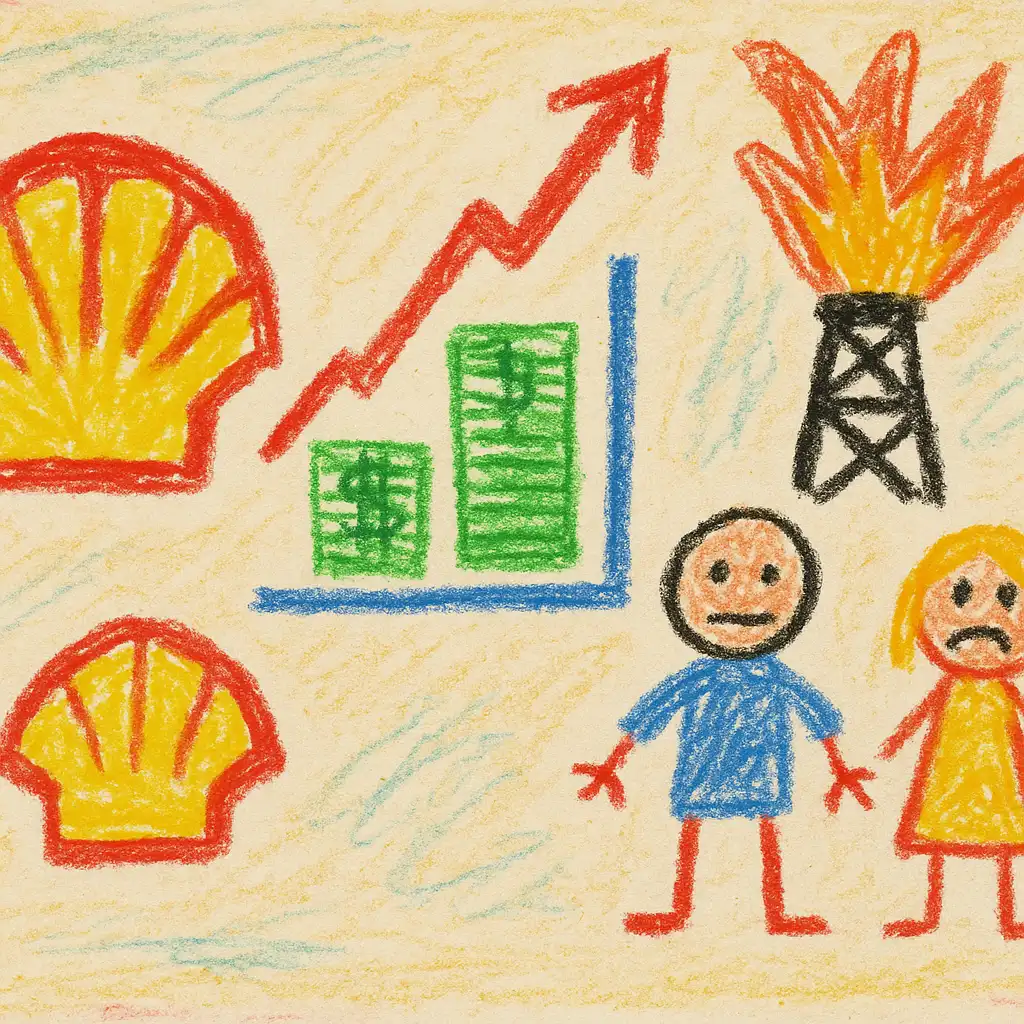
Explain Like I'm 5
Okay, imagine you have a lemonade stand, and you sell cups of lemonade for $1 each. One day, you hear that there's a big party happening nearby, and everyone wants lemonade! So, you decide to raise the price to $2. Now, even though you’re selling less lemonade, you make more money because of the higher price.
That's kind of what's happening with Shell. Because of some trouble in a place called Iran, oil (which is like a special ingredient for many things) is getting more expensive, and Shell is making a lot more money from it—like doubling their profits!
Explain Like I'm 10
Alright, so here’s the scoop. Shell is a huge company that sells oil and natural gas, which are super important for things like cars, heating, and even making electricity. Recently, there’s been some conflict involving Iran, which is a country that plays a big role in the oil market.
Because of this situation, oil prices have gone up since it’s harder to get oil from certain places. The Strait of Hormuz, a key waterway for oil shipments, has been affected, causing disruptions in supply. When supply goes down and demand stays high, prices naturally go up. This means that Shell, along with other companies, is now able to sell oil at much higher prices, which is why they reported that their profits have doubled.
Explain Like I'm 15
Let's break this down further. The recent conflict involving Iran is significant because Iran is located near the Strait of Hormuz, a critical chokepoint for global oil transport. About a fifth of the world's oil passes through this narrow waterway. When tensions rise in that region, it creates uncertainty about oil supply, leading to price spikes.
Shell, being one of the largest oil companies in the world, is directly impacted by these price fluctuations. With the recent unrest, oil prices have surged. As a result, Shell announced that its profits have doubled compared to the previous year, reflecting the increased revenue from selling oil at higher prices.
Historically, whenever there’s a crisis in oil-producing regions, companies like Shell can benefit from rising prices. However, the broader implications are complex. Higher oil prices can lead to increased costs for consumers and businesses, which might slow down economic growth. It also raises questions about energy security and the push for alternative energy sources.
Looking ahead, experts are keeping a close eye on the situation in Iran and the global oil market. If tensions remain high, we may continue to see volatile prices, and Shell’s profit margins could either expand or contract based on how the situation evolves. The energy landscape is changing, and companies like Shell may have to adapt to not just market fluctuations but also the growing demand for sustainable energy solutions.
Want to read the original story?
View Original Source