UK inflation rises after Iran war pushes up fuel prices
Explain Like I'm 5
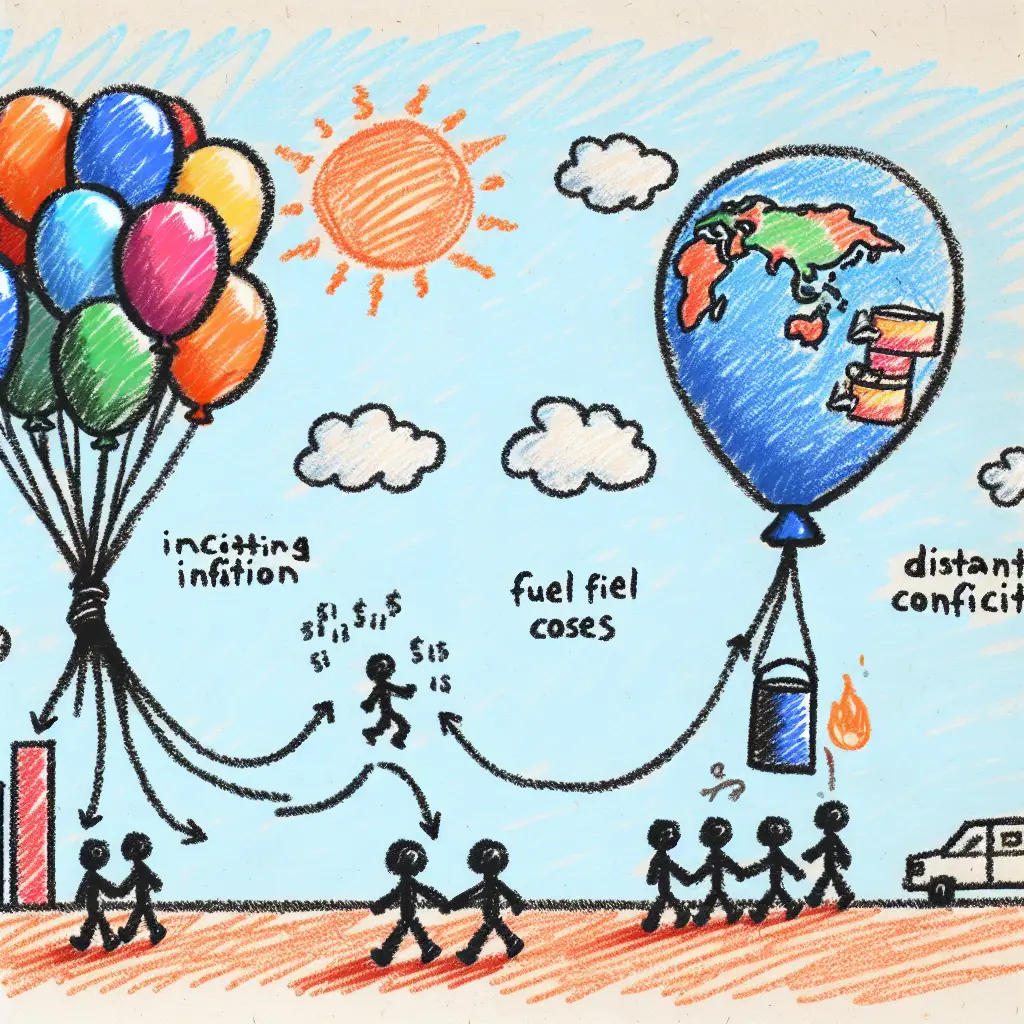
Imagine you have a piggy bank where you save money to buy your favorite toy car. But one day, the price of the toy car goes up because the toy store has to pay more to get the cars delivered. This happened because the price of fuel, which is like the food for cars and trucks, went up. In the UK, something similar happened recently. Because of a war far away in a place called Iran, the cost of fuel got really high. Now, everything that needs to be moved by trucks or cars costs more to deliver, just like your toy car. So, it’s like things are slowly getting more expensive, which is what grown-ups call "inflation."
Explain Like I'm 10
Inflation is when prices for things we buy, like toys, food, and clothes, start to increase. Recently in the UK, inflation went up because of a war in Iran. Iran is a country that sells a lot of oil, which is used to make fuel like petrol and diesel. When there's a war, it can make it hard for Iran to sell their oil, and this makes the price of oil go up all over the world. In the UK, when fuel prices rise, it costs more to transport goods around the country, and this makes everything a bit more expensive.
The news we're talking about shows how the war in Iran is affecting people far away in the UK, making their cost of living higher. It’s like when you're planning to buy a snack at school, but the price has suddenly gone up, and now you need more money to buy the same snack!
Explain Like I'm 15
Inflation can be a tricky topic, but it essentially means an increase in prices over a period of time, which affects how much we can buy with our money. The UK is currently experiencing a spike in inflation partly due to a conflict in Iran. Iran is one of the world’s big oil producers, and wars can disrupt how much oil they can sell. When oil supplies drop but people still need the same amount of oil, prices go up (classic supply and demand!).
This increase in oil prices affects fuel costs globally, including in the UK. Higher fuel prices mean higher transportation costs, which translate into higher prices for goods and services across the board. This is the immediate effect of the war in Iran on UK residents—their cost of living goes up because it costs more to move products around.
Looking at the broader picture, rising inflation can lead to tighter budgets for households and can influence economic policies. For example, governments or central banks might change interest rates to try to manage economic growth and control inflation. The situation in Iran and its ripple effects show how interconnected our global economy is, and how events in one part of the world can significantly impact another.
Want to read the original story?
View Original Source