
Why Putin’s nuclear threats aren’t working anymore
Explain Like I'm 5
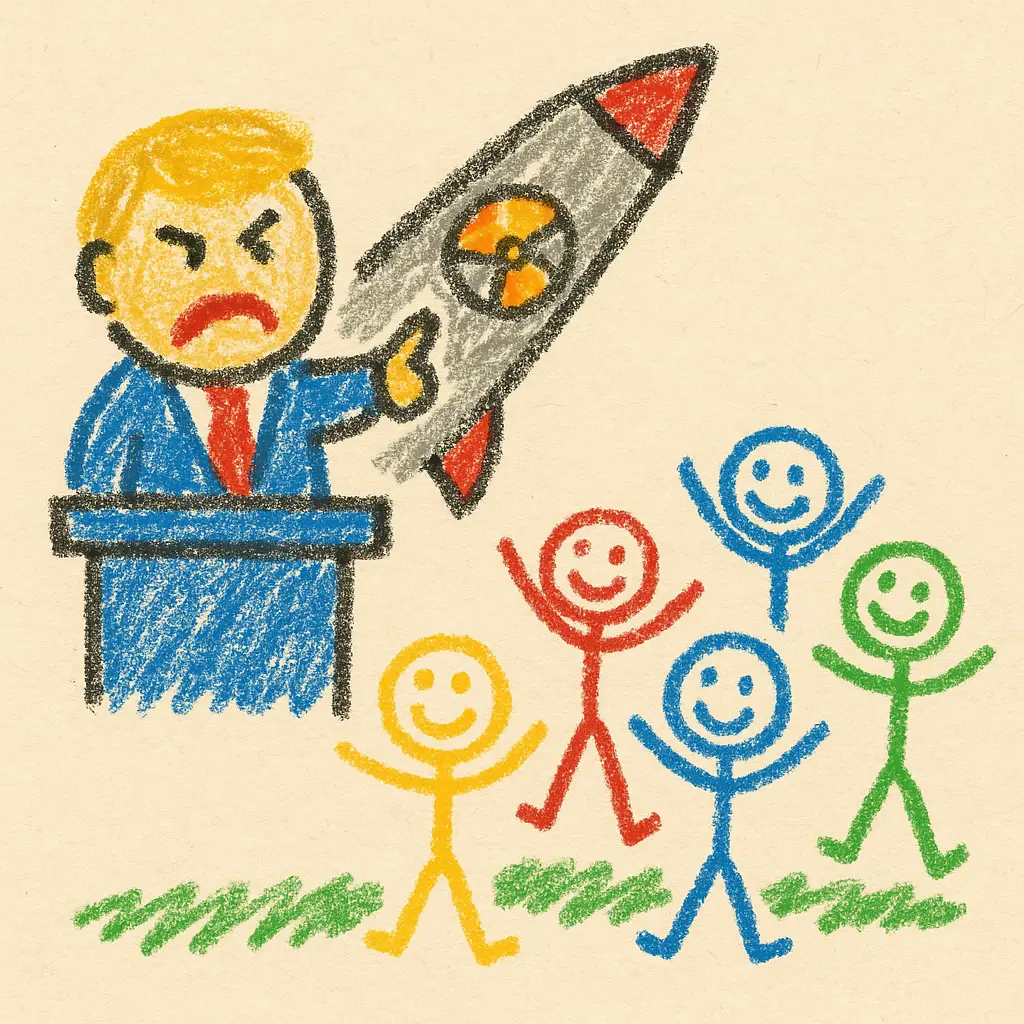
Imagine you have a really loud whistle that you use to get everyone's attention in the playground. The first few times you blow it, everyone stops and listens because it's so loud and surprising. But if you keep blowing it all the time, eventually, your friends might start ignoring it because they know you're just going to keep playing anyway. This is kind of what's happening with Russia's leader, Putin. He has been making very big threats, saying he might use super powerful and scary weapons. At first, these threats made other countries really nervous. But now, they're starting to see that he might just be making noise without actually doing anything, so they're not as scared anymore.
Explain Like I'm 10
Okay, so there's this big, serious problem where Russia's leader, Vladimir Putin, has been saying he might use nuclear weapons, which are the most powerful and dangerous weapons in the world. Initially, when he started making these threats, countries around the world were very worried because no one wants these super dangerous weapons to be used. They can cause a lot of harm and are very scary.
However, recently, at a big meeting in Turkey with a group called NATO (which is a team of countries that work together to keep peace), the leaders decided to strongly support Ukraine (another country that Russia is fighting with) as Ukraine tries to push back by targeting places in Russia that are important for their energy (like where they get their electricity). This shows that these countries are not as scared of Putin's threats as they used to be. They think that maybe he's just trying to scare them into doing what he wants without actually planning to follow through with his threats.
Explain Like I'm 15
Vladimir Putin, the President of Russia, has been using the threat of nuclear weapons as a tool in his geopolitical strategy, especially noticeable during the ongoing conflict with Ukraine. Nuclear weapons are essentially a big red button that no one wants to push because the consequences are globally catastrophic. Initially, Putin's threats were taken very seriously because the potential risks of nuclear war are unimaginably high, and thus, such threats would typically cause other nations to be cautious and perhaps even alter their policies to avoid such escalation.
However, during a recent NATO summit in Turkey, a significant shift was observed. NATO members displayed a united front in strongly supporting Ukraine's military actions, which now include strategic strikes deep within Russian territory. This is a clear indication that the international community is perhaps seeing these nuclear threats as bluffs more than genuine intentions. It’s like calling someone's bluff in a high-stakes game.
The historical context here involves the delicate balance of power known as deterrence—the idea that just having nuclear weapons discourages others from attacking you. But Putin’s repeated threats without follow-through might be leading to a "cry wolf" scenario, where the dire warnings are progressively taken less seriously, potentially diminishing Russia's sway in geopolitical negotiations.
Looking ahead, the key question is how this shift might affect global security dynamics. If nations begin to view nuclear threats as empty threats, it could either lead to reduced global tensions (as countries call bluffs without catastrophic outcomes) or escalate conflicts if countries test the boundaries of these threats. Experts are closely monitoring this situation, as the implications are enormous—not just for Russia and Ukraine, but for international security as a whole.
Want to read the original story?
View Original Source