Higher petrol and diesel prices push UK inflation to 3.6%
Explain Like I'm 5
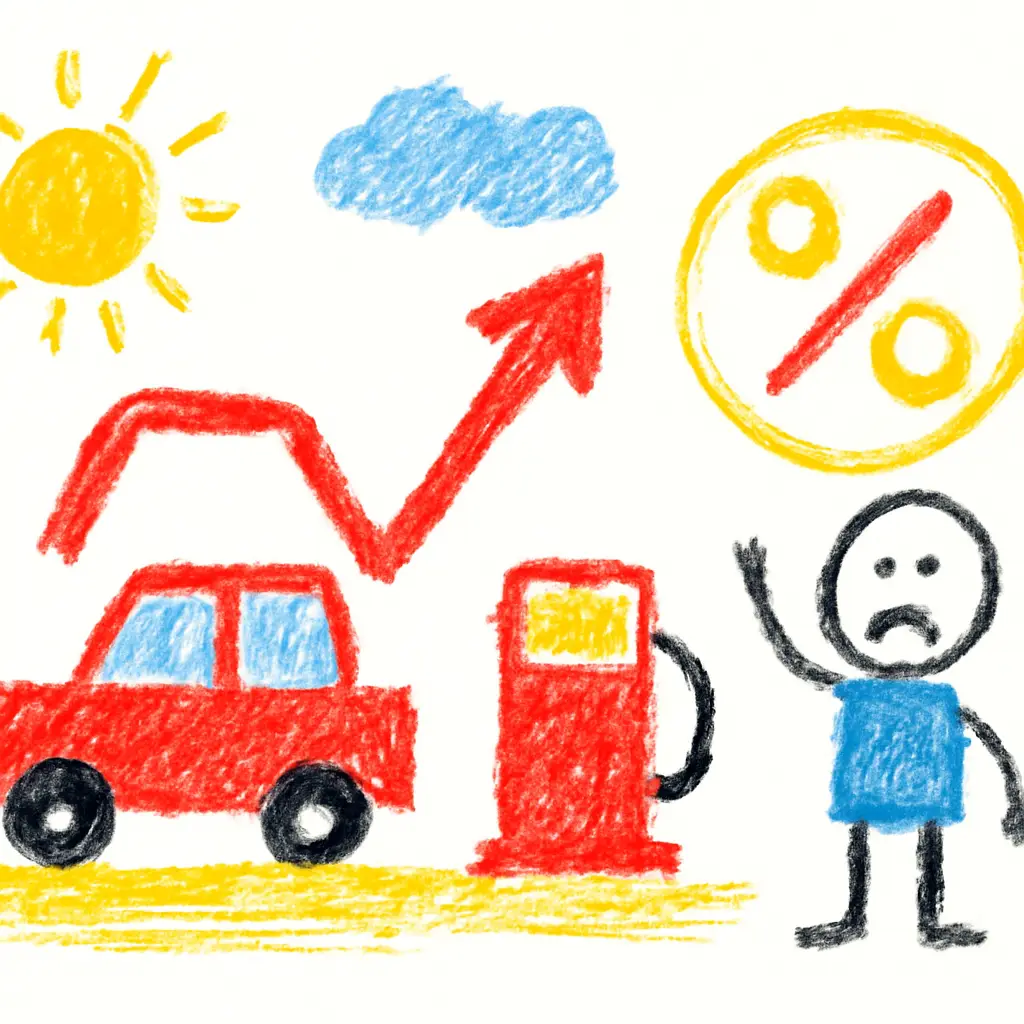
Okay, imagine you have a piggy bank where you save your allowance. Every time you want to buy a toy, you take some coins out. Now, if all the toys suddenly cost more coins, you can’t buy as many, right? That’s what’s happening with money in the UK! The price to fill up cars with petrol and diesel (that’s the stuff that makes them go vroom!) is going up, and because of that, everything else is getting more expensive too. So, people can’t buy as many toys, or, in this case, things like food and clothes.
The big takeaway is that when petrol prices go up, it makes everything else cost more too!
Explain Like I'm 10
So, in the UK, petrol and diesel prices have been rising, and this is causing a problem called inflation, which means prices for everything are going up. Right now, the inflation rate is at 3.6%. This is like when you walk into a candy store, and all your favorite candies suddenly cost more than they did last week – you’re getting less candy for the same amount of money!
The main players in this situation are the people who buy petrol (like drivers) and companies that sell goods. When drivers have to pay more to fill their tanks, they might cut back on other spending, like buying new clothes or eating out. This creates a ripple effect, where businesses have to raise their prices too because their delivery costs have gone up. So, it’s not just about petrol; it’s affecting the whole economy!
Explain Like I'm 15
The news about rising petrol and diesel prices in the UK is significant because it's directly contributing to a rise in inflation, which has now hit 3.6%. Inflation measures how much prices for goods and services are increasing over time, and when it goes up, it often means that consumers are feeling the pinch in their wallets. This increase is largely due to higher costs for raw materials and goods leaving factories, which is a knock-on effect of the more expensive fuel.
Historically, fuel prices can fluctuate due to various factors, including global oil prices, supply chain issues, and demand. In this case, rising fuel costs are making transportation more expensive for businesses. When businesses face higher costs, they typically pass those costs onto consumers, leading to higher prices for everyday items. This can create a cycle where inflation continues to rise, further impacting economic stability.
The broader implications of this situation could be felt across various sectors. For instance, as people spend more on fuel, they might reduce their discretionary spending on things like entertainment or dining out, which could slow down economic growth. Experts are concerned that if inflation continues to rise, it could lead to tighter monetary policies, like higher interest rates, which can affect loans and mortgages—making it harder for people to borrow money.
Looking ahead, it will be interesting to see how the government and central banks respond. They might try to implement measures to control inflation, but those can also have their own consequences. Ultimately, the situation is dynamic, and economists will be watching closely to see how these factors play out in the coming months.
Want to read the original story?
View Original Source